
The Scramble for APAC
The Space Diplomacy Newsletter-Event Tracker

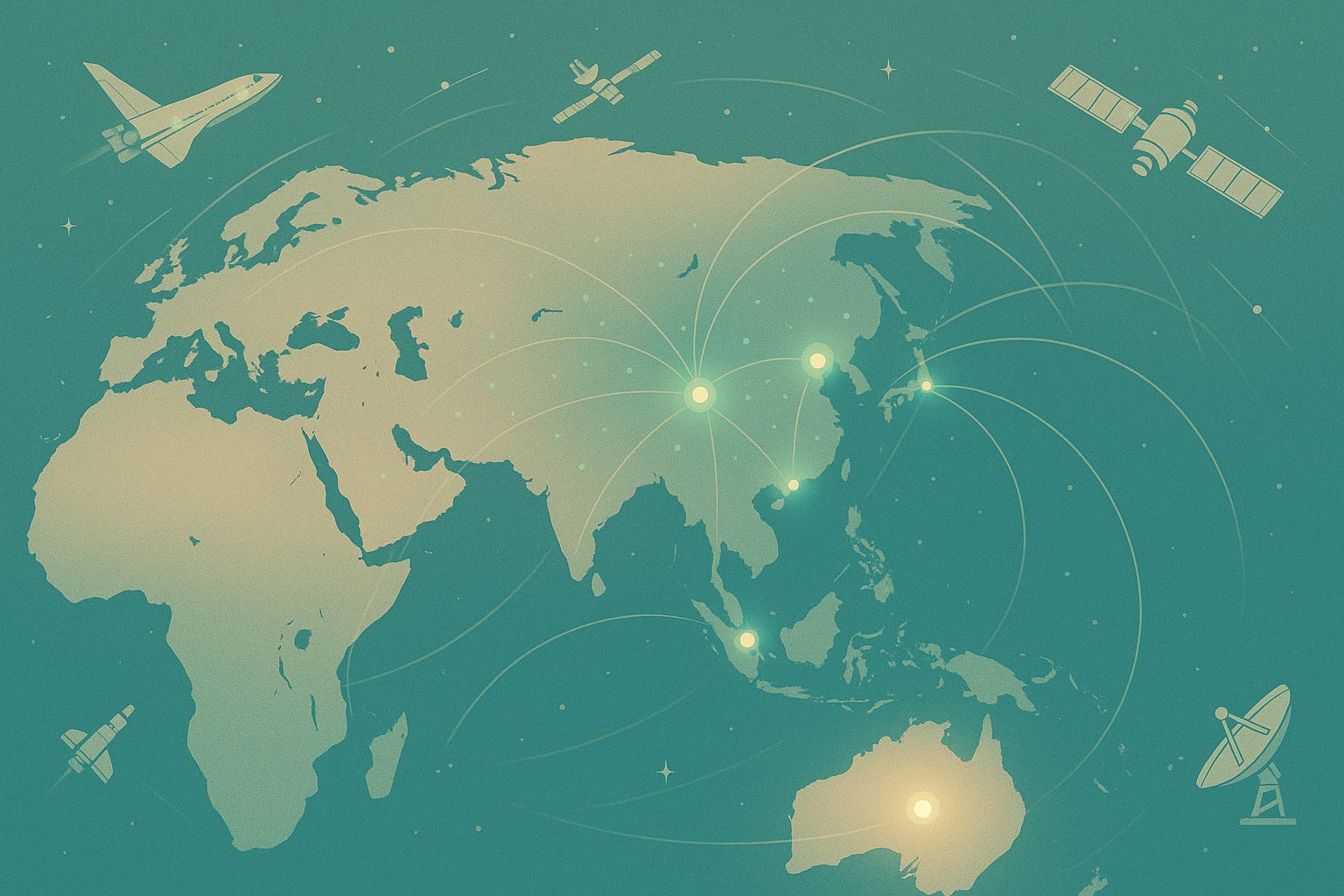
The broader Asia-Pacific (APAC) region is fast emerging as the epicenter of space collaborations. Some are about legitimizing long-term normative leadership in the global space community. But many others are about actors standing together across regions to advance joint dual-use space capabilities for defense and prosperity. The diplomatic motivations behind all of them deserve close attention for both their geopolitical and geoeconomic implications.
All this was on display at the IAC 2025 plenary session. Australia, a longstanding reliable space partner for many countries, is moving towards treaty-level agreements with the United States and Europe. It already has over 45 years of treaty-level science cooperation with Japan. Canada has a space strategy for APAC. The Canadian robotic arm has been instrumental for Japan’s cargo missions to the International Space Station and will remain so for such next-generation missions. Alongside that, Canada is forthright about seeking industrial collaborations and investments for space defense. China is actively building scientific collaborations centered on its lunar sample returns with institutions in the UK, France, Germany, Pakistan, Japan, and even the USA.
Another potentially transformative axis for APAC may be the establishment of a Tokyo office for ESA (European Space Agency). ESA too has a track record of collaborating with JAXA on a range of projects of mutual interest to the two sides, such as missions to Mercury and asteroids, lunar explorations, and climate change. Both ESA and JAXA are also positioned to go after what they call the “Next Big Cooperations” focused on planetary defense, Earth observation, LEO development, Moon and Mars exploration, and space science. So does this mean that an ESA-JAXA axis may well influence the tenor of space governance in and out of APAC...?